JP Keating is an Irish photographer working internationally, both in the studio and on location. He came to photography early, using his grandmother’s point‑and‑shoot camera, he began documenting his family, friends and everyday life. This grew into a love of people and their stories, and a desire to tell those stories through photography.
While studying fashion design and working alongside haute couture designer Ali Malek, JP began photographing fellow students’ collections. That work quickly appeared in national and international publications including i‑D and Trendi, leading to editorial commissions with The Sunday Times Style, The Sunday Business Post, Social & Personal and Irish Tatler. He was later recognised by the Sunday Independent as a rising figure in Irish fashion and also one of the top 10 creatives in Ireland by the Irish Times.
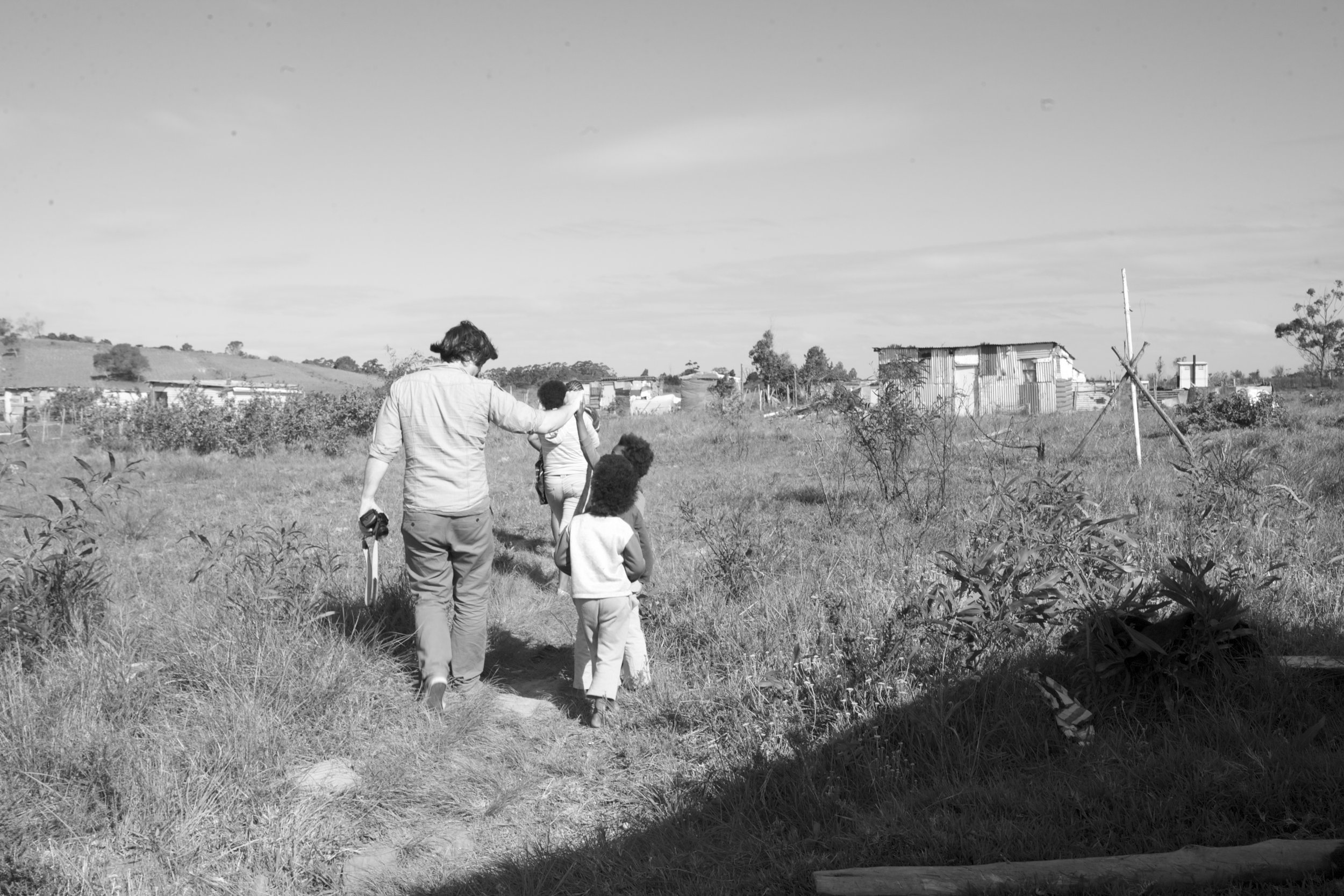
Alongside his commercial work, JP has continued to pursue long‑form, socially driven projects. His first book, The Lir Is Forever, documents the creation of Ireland’s first purpose‑built acting school in partnership with RADA and Trinity College Dublin, and features portraits of many of Ireland’s leading actors, writers and directors. He was also commissioned by UNICEF Ireland to document life in under‑resourced communities in South Africa’s Eastern Cape, spending time with residents as safe parks were built in some of the province’s most marginalised areas.
His photo essay Danny, an intimate six‑month study of a homeless heroin addict in Dublin, was highlighted by Magnum Photos as a defining narrative on addiction.
Another six-month-long project in 2024 focusing on the lives of the men living in an IPAS centre in Courtown, Co. Wexford, was featured in The Guardian UK and resulted in JP returning to teach a photography class to the participants the following year, so that they could document their own lives. An exhibition of their work, which ran alongside JP’s original project, was shown in September of 2025 in conjunction with Wexford Co Council.
JP previously founded the creative collective Aesthetic, overseeing and producing still and motion work for brands including Jameson Irish Whiskey, Just Eat, Bord na Móna, Bodytonic, The Big Grill and The Beatyard, and leading creative direction on a number of rebrands for the Tourism and hospitality sector.
He can usually be found somewhere between Wexford and London, while continuing to develop socially engaged documentary projects in Ireland focused on immigration, asylum seekers and the Traveller community. Most recently, a portrait from his series “ Documented Males “ has been shortlisted for the 2026 Taylor Wessing Prize.
JP Keating is represented worldwide by Agency 54.
CONTACT :
Agent : Karen Featonby

SELECTED PRESS :
https://www.image.ie/living/the-irish-photographer-opening-up-a-dialogue-on-life-inside-an-ipas-centre-967238 IMAGE MAGAZINE (Sept 2025 )
“ The Irish photographer opening up a dialogue on life inside an IPAS Centre “
by Sarah Gill
17th Sep 2025
JP Keating is a documentary and commercial photographer who’s shot the likes of Blindboy, Colm Meaney and Timmy Mallett, sipped tea with Michael D Higgins, and immersed himself in communities around the globe in pursuit of snapshots of humanity.
Through his new exhibition, JP Keating is showcasing photographs taken by asylum seekers living in the Courtown Hotel during a three-month workshop he hosted over the summer. Offering a glimpse into the human lives and faces behind the hotel’s walls, there’s an urgency and beautiful humanity to this work.
Was a career as an artist something you always aspired to?
From an early age, I loved drawing, painting and photography. I drew and took photographs all the way through my teens without much direction; I just did it because I loved it. A career as an artist didn’t seem like a viable option at the time, and it wasn’t until my early twenties—when I dropped out of a business degree to enrol in fashion design—that I began to see a clear creative path for myself. It was there that I began photographing fellow students’ collections, which gave some purpose and direction to my work, and at the same time, I began working with the couture designer Ali Malek, which really opened my eyes to an entirely different world.
What is your process when creating a new work? How do certain themes and experiences feed into or present themselves in your art?
When I start a new project, I’ll begin by researching the subject extensively. Then, I’ll start visualising photographs that I think will tell the story in the most impactful and direct way. After that, I map out a general through line, which could be a style of lighting or a colour or composition that ties the series together. I then go back to the images that I visualised previously and storyboard them out, working out exactly what type of camera/lens/lighting set-up is required, where I’m going to shoot it, time of day, and all of the finer details.
For example, with the Courtown project, I felt that if initially I could photograph four or five of the guys from the hotel in their bedrooms, then I would have half the story already told, and much of the rest would follow on from having actually gotten to that place. It’s a very vulnerable situation to be in—having someone in your room photographing you—so I knew I would obviously have to get to know the guys beforehand to gain that kind of trust.
I spent a couple of months calling in once or twice a week so people got used to me being around, and I talked to everyone who would listen about what the project was about. Once I began photographing the guys, I actually got the bulk of the project completed over the course of a week. Other personal projects like MART—where I recently photographed the local cattle mart and the elderly farmers that attend every week—were directly inspired by my childhood in Clare, and going to the Mart with my grandfather.
Another new theme I was trying to figure out for a project was one on nostalgia and how it’s become so prevalent in the modern age, as maybe we look back wistfully on a time without devices, et cetera. I then ended up photographing Timmy Mallett over the summer this year, so now that project has evolved into me currently trying to track down television presenters and personalities from the ‘80s and ‘90s to photograph for a series of portraits all based around that theme of nostalgia.
That’s a slightly more flippant approach than my next commissioned documentary, which is on the Travelling community. That will be rigorously researched and workshopped, with a huge emphasis placed on making a lasting connection with a community where again I’ll be going in as an outsider, seeking acceptance and figuring out how I can document them in an honest and empowering way.
Tell us about the exhibition, Shared Space: Life at the Courtown Hotel.
Shared Space: Life at the Courtown Hotel showcases photographs taken by refugees who are living (or have lived) in the Courtown Hotel, during a three-month workshop I led this year. Using their mobile phones (so there was no barrier to entry), the men documented their own experiences here in Ireland. The intention of the exhibition is to open a dialogue with the local community, offering a glimpse into the human lives and faces behind the hotel’s walls. The participants’ work is shown alongside selected images from my own project on life at the Courtown Hotel, which was published as a photo essay in The Guardian UK last October. I had kept in contact with the guys after that initial project, and then this summer, I taught them a weekly photography class, which has now culminated in us putting on this exhibition with support from Wexford County Council.
There’s an urgency, timeliness and beautiful humanity to this. What pulled you towards creating it?
Last year, during the growing anti-immigration swell that seemed to permeate through all forms of media, I felt what was becoming lost in the ether was that asylum seekers and refugees are people. Not ‘aliens’ or ‘illegals’, but someone’s son, brother, or father. Whatever your stance is on our flawed immigration system, the one thing that rings true is that these people are fellow human beings, a lot of whom have fled from unspeakable atrocities to make a better life for themselves and their families. They are demonised and dehumanised at every opportunity, and I wanted to show what actually happens in the hotel, who lives there, and try to dispel some of the myths and rumours that surround them.
What is your intention for this work?
The local community in Courtown and Gorey have been fantastic with the guys from the hotel. Organisations like Wexford Local Development, the local authority integration team, the Garda and community leaders like Craig Lang of Tidy Towns have given excellent guidance and direction to the guys living in the hotel. Continuing that work, as well as projects like this one, is so important to keep that connection strong between the local community and the asylum seekers. Ultimately, I would love it if other towns around the country would take what we have learnt from this project (and the Courtown and Gorey community support network at large), and implement the same or similar initiatives to help foster better relationships between their own communities and asylum seekers.
What were some standout connections or moments from your time working on this project?
I photographed one of the guys, Gesis, a young Sudanese man, in a rapeseed field holding an Irish flag at the start of the summer. As we walked back to my car after the shoot, the flag fell out of my bag and onto the ground. Gesis ran over to it, carefully picked it up, dusted it down and folded it back up before placing it very carefully on the back seat of my car. As we drove away, I asked him why, and he said, “People die for these things; we must respect them greatly.”
You’ve said, “For the participants, that act of photographing became a step towards belonging.” Tell us more about this idea.
The act of engaging with what is around you, interacting with the world in a visual sense by documenting what you see, imprints you and your own unique viewpoint onto your subject and surroundings. A photograph is a visual representation of how you interpret a particular subject and your relationship with it. Why am I documenting this? How does it make me feel? What is my relationship to it? Taking photographs in that thoughtful way can be incredibly therapeutic, and it’s something we explored extensively in our class.
For me, photography makes you hyperfocus on what’s happening around you, putting your mind into an almost meditative or flow state. You have to be entirely in tune with your surroundings, every moving part, every person, every shadow or change in light that unfolds before you. There’s no choice but to remain in the present, and that translates into a deeper understanding and a greater connection with a place, and as a consequence, perhaps with yourself.
The last thing I saw and loved… My wife and three daughters, just a moment ago.
The book I keep coming back to… Down and Out in Paris and London, by George Orwell.
I find inspiration in… People in general, but especially the marginalised. Surreal moments, raw emotions, tenderness and oddities. Mundane things in strange places. Strange things in mundane places.
My favourite film is… Anything by Fellini – so maybe 8½. I also love Raising Arizona or Double Impact, probably Van Damme’s most significant work.
My career highlight is… As a young photographer, drinking tea at the kitchen table with Colm Meaney in his mam’s house, trying to muster up the conviction to start photographing him. More recently, I was invited to the Áras to photograph President Michael D Higgins. We spent an hour chatting about everything from Marxism to Jeffrey Epstein.
The song I listen to to get in the zone is… In the studio: ‘Gimme Shelter’ by The Stones. In the gym: ‘I Can Change’ by LCD Soundsystem.
The last pieces of art I recommended are… Book: The Great Shark Hunt, by Hunter S Thompson. Film: Intermission. Show: The Mighty Boosh. Artist: Alec Soth.
I never leave the house without… A camera.
The performance I still think about is… Pete Doherty/Babyshambles in the Village on Aungier St in 2004. While I was in college, I worked part-time for a while loading gear into venues for bands, and afterwards that night I stood down the back of the room with the promoter and watched the gig. With his head in his hands, he said he hadn’t seen a performance like it in his 30 years of putting on shows. The crowd rushed the stage at one point, and mayhem ensued. A couple of bouncers tried in vain to hold the line, shoving one girl back as she attempted to climb on stage, before being booted off the edge themselves by Doherty and his entourage of fans. Absolute carnage, it was glorious.
The art that means the most to me is… Easy Rider. It reminds me of my mum… Who’s still with us, by the way, I just realised how that sounds!
The most challenging thing about being an artist is… As a photographer who works commercially, I find that it’s about having a balance and creating work that’s just for you, as well as your commercial work. Hopefully, at some point, the two become much the same.
If I weren’t a documentarian and photographer, I would be… Teaching old ladies how to swing on a driving range in Florida.
The magic of art to me is… I’m always happy to go to work.
The ‘Shared Space: Life at the Courtown Hotel’ exhibition is open to the public in Gorey Library until Saturday, September 20.
https://www.image.ie/living/the-irish-photographer-opening-up-a-dialogue-on-life-inside-an-ipas-centre-967238 THE IRISH TIMES MAGAZINE.
“ Photography Is an art form that is honed not just through training, but through dedication, hard work, and visit upon visit to the Kodak counter. Thus, when kicking off this series, Nine Lives, We had to look for a photographer who reflected and embodied the creativity and flair which have been constant themes. Somebody who has visually explored the very essence of Dublin in all its urbanite glory. That man, and the sixth of our Nine Lives, is J.P Keating, whose work in portraiture and commercial photography has humanity and character that is only rivalled by the man himself.
His work has flitted between social strata - he's as likely to document the down-and-out as he is to document Colm Meaney or Saoirse Ronan, and there’s a pervading sense of the documentary woven into his work.
It’s probably J.P’s effusive everyman humour that makes his work with high-profile actors and musicians as powerful as his work documenting the faces at the bus stop. He can’t help but laugh as he recalls sitting in Colm Meaney’s mam’s kitchen, trying to work out how to shoot Meaney for The Lir, as the rain pummelled the window panes. On heading into the back garden, Meaney, with rain-splattered spectacles, starts yelling at the elements. Out comes J.P’s camera, and some of the most beautiful images you’re ever likely to see of the Irish actor are caught for posterity. It’s the lack of manipulation that J.P uses, that really gives his portrait work soul, in the most magical sense of the word. As for his next project, he is travelling back to the Eastern Cape, working on a book with UNICEF. He’ll be documenting young people as part of a youth empowerment programme, which we’re certain will be poignant, affecting work. “
KATE COLEMAN.
SELECTED CLIENTS :
The Guardian / Tiger beer / Unicef Ireland / The Sunday Times / The New York Times / The Irish Times / Havas / Aer Lingus / Harper Collins / Innocent smoothies / Virgin Records / RCA Records / Image Magazine / Jameson / Bord na Mona / Just-eat.ie /
Three Ireland / Movember Ireland / 3 Fe Coffee / Dawn Fitzgerald Atelier / Thinkhouse PR / WHPR /
Bodytonic music / The Lir Academy / Sure / Aer Lingus /Business Post/ Trendi magazine / Barzuk records / Innocent smoothies /
Bacardi / Pernod Ricard / RTE / Dublin Fringe Festival / Sony music / All Bar None / Weirs & Sons / Sure / Roads group
Social and Personal magazine / Irish Tatler / Slater Design / Wolfie marketing / Goodfellas Pizza / Wexford Co Council / Failte Ireland / The Arts Council of ireland /